When Apps Forget Their Users: Why Supporting Older Devices Still Matters
Alright, hello everyone!
Today I want to step away from my usual writing style and tell you a story that happened to me, and, as it turns out, to quite a large group of people as well
Fine, I installed it. I open it — and get a new message: *this outdated version is no longer supported, you cannot use this app*
And at that moment I had a completely logical reaction: what the hell am I supposed to do now?!
What am I supposed to do if I actually need a service that exists only as an app? And what if the web version is so stripped down or unfinished that it simply doesn’t have the functionality the mobile app has?
For many services, the web isn’t even an alternative — it’s more like a technical placeholder that doesn’t solve any real user problem
And what about people who have older phones and are totally fine with them? People who don’t chase every Apple announcement?
Who aren’t filming movies on their phones, but simply want to call, text, and occasionally use a service? I completely understand this logic
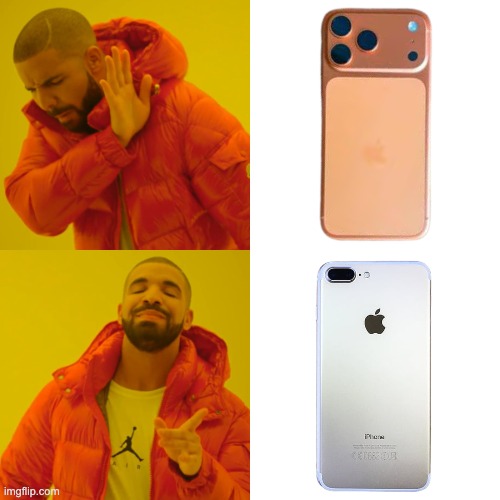
When I upgraded from the iPhone 7+ to the 11 Pro Max, I genuinely felt bad about it. The 7+ was a fantastic phone — and honestly, sometimes I want to go back to it
So I deeply understand those who don’t upgrade. Everyone has their reasons: financial, psychological, or simply human — “I have everything I need”
But the world today works as if your phone becomes “obsolete” faster than you do. A year or two — and the market tells you: *time to buy a new one*
That’s it. From that moment on you’re just silent statistics that’s easier not to notice
Except that’s not true. There’s a huge group of people who don’t upgrade and don’t plan to. I know this not from theory — I saw it at work
We had analytics showing device types and OS versions our users came from. And we clearly saw: an update gets released — and a massive percentage of people don’t update at all
So the demand is there. Phones are working. Users are fine. And the app says: *sorry, we don’t see you*. Updates, security, patches — all of this is important. Absolutely
We’re long past the Siemens and Nokia era where factory firmware was the peak of luxury. But the problem isn’t the updates
The problem is that many companies don’t consider it necessary to support all of their users
There’s a simple statistic: out of 100% of users, about 80% update. And the company says: *oh, then losing the other 20% isn’t critical*
But those 20% — are people too. So what do apps have to do with this? For me, they’re a very clear and expressive marker
A marker of how people who build these apps think, how large companies think, how the people shaping this world think. It shows that we cannot neglect any of our users
Windows XP was supported for many years — and that’s exactly why it earned such a reputation. It’s the same here
From a process perspective, this isn’t complicated. If a team is working on new versions and the company has resources to move forward, then that same company can easily allocate resources to maintain their current users — to support older versions for as long as those versions are actively used
Setting up such a workflow isn’t a problem either: assign a dedicated specialist, or simply add tasks for older-version support into the same backlog
But for this to actually work and not turn into a formality, you have to remember the main thing: the key business value is respect and care for your user